POPE FRANCIS’ REFLECTION ON THE 5TH SUNDAY IN ORDINARY TIME YEAR B.
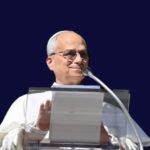
ANGELUS ADDRESS
7 February 2021
Dear brothers and sisters, buongiorno!
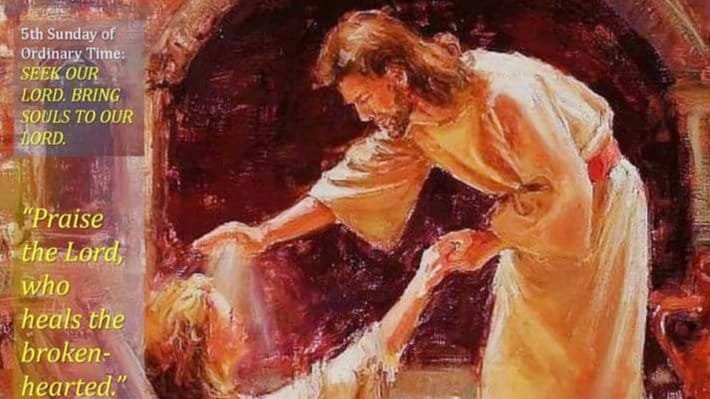
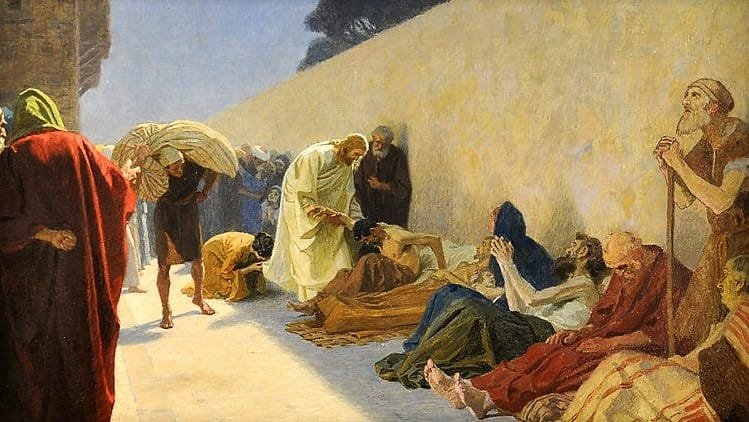
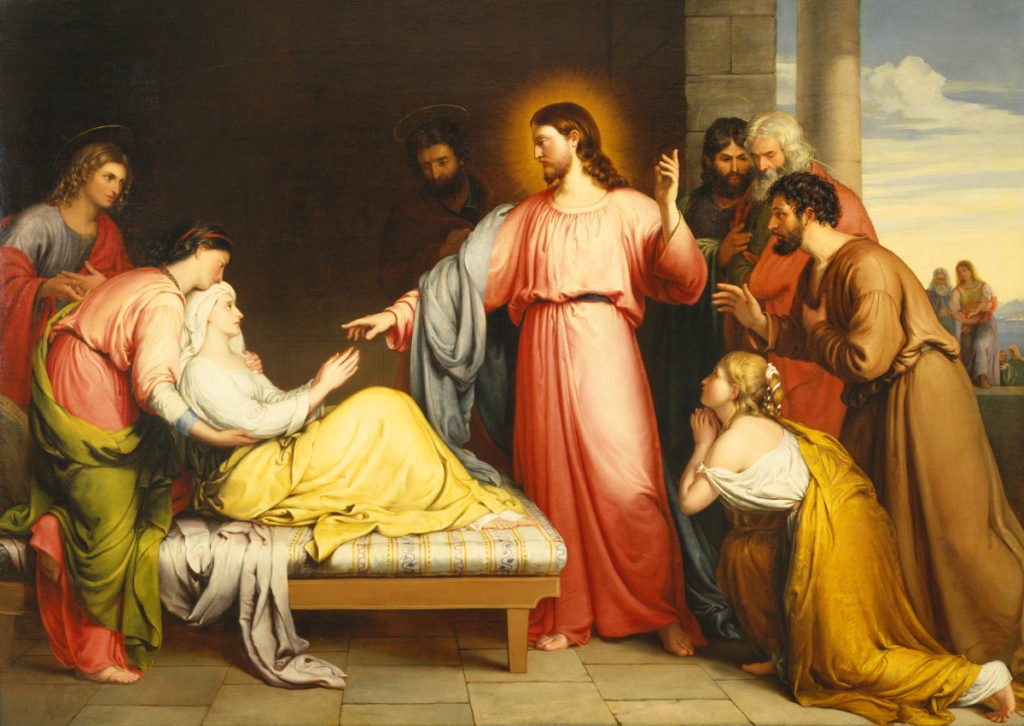
Once again in the Square! Today’s Gospel passage (cf. Mk 1:29-39) presents the healing, by Jesus, of Peter’s mother-in-law and then of many other sick and suffering people who gather round him. The healing of Peter’s mother-in-law is the first physical healing recounted by Mark: the woman is in bed with a fever; Jesus’ attitude and gesture toward her are emblematic: “he came and took her by the hand” (v. 31), the Evangelist notes. There is so much tenderness in this simple act, which seems almost natural: “the fever left her; and she served them” (ibid.). Jesus’ healing power meets no resistance; and the person healed resumes her normal life, immediately thinking of others and not of herself – and this is significant; it is the sign of true “health”!
That day was a sabbath day. The people of the village wait for sundown and then, the obligation of rest having ended, they go out and bring to Jesus all those who are sick and possessed by demons. And he heals them, but forbids the demons to reveal that he is the Christ (cf. vv. 32-34). Thus, from the very beginning, Jesus shows his predilection for people suffering in body and in spirit: it is a predilection of Jesus to draw near to people who suffer both in body and in spirit. It is the Father’s predilection, which he incarnates and manifests with deeds and words. His disciples were eyewitnesses to this; they saw this and then witnessed to it. But Jesus did not want just spectators of his mission: he involved them; he sent them; he also gave them the power to heal the sick and cast out demons (cf. Mt 10:1; Mk 6:7). And this has continued without interruption in the life of the Church, up to today. And this is important. Taking care of the sick of every kind is not an “optional activity” for the Church, no! It is not something extra, no. Taking care of the sick of every kind is an integral part of the Church’s mission, as it was for Jesus’. And this mission is to bring God’s tenderness to a suffering humanity. We will be reminded of this in a few days, on 11 February, with the World Day of the Sick.
The reality that we are experiencing throughout the world due to the pandemic makes this message, this essential mission of the Church, particularly relevant. The voice of Job, which echoes in today’s liturgy, is once again the interpreter our human condition, so lofty in dignity – our human condition, the loftiest in dignity – and at the same time so fragile. In the face of this reality, the question “why?” always arises in the heart.
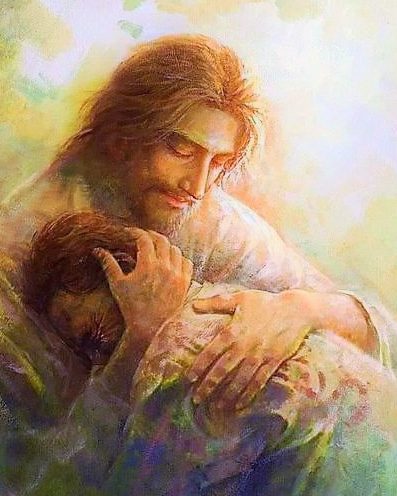
And to this question Jesus, the Word Incarnate, responds not with an explanation – to this because we are so lofty in dignity and so fragile in condition, Jesus does not respond to this ‘why’ with an explanation -, but with a loving presence that bends down, that takes by the hand and lifts up, as he did with Peter’s mother-in-law (cf. Mk 1:31). Bending down to lift up the other. Let us not forget that the only legitimate way to look at a person from top down is when you stretch out a hand to help them get up. The only one. And this is the mission that Jesus entrusted to the Church. The Son of God manifests his Lordship not “from top down”, not from a distance, but in bending down, stretching out his hand; he manifests his Lordship in closeness, in tenderness, in compassion. Closeness, tenderness, compassion are the style of God. God draws near, and he draws near with tenderness and compassion. How many times in the Gospel do we read, before a health problem or any problem: “he had compassion”. Jesus’ compassion, God’s closeness in Jesus is the style of God. Today’s Gospel passage also reminds us that this compassion is deeply rooted in the intimate relationship with the Father. Why? Before daybreak and after sundown, Jesus withdrew and remained alone to pray (v. 35). From there he drew the strength to fulfil his mission, preaching and healing.
May the Holy Virgin help us to allow Jesus to heal us – we always need this, everyone – so that we might in our turn be witnesses to God’s healing tenderness.
SOURCE: https://press.vatican.va/content/salastampa/en/bollettino/pubblico/2021/02/07/210207a.html
EMPHASIS MINE.
ANGELUS ADDRESS
4 February 2018
Dear Brothers and Sisters, Good morning!
This Sunday’s Gospel reading continues [5th Sunday in Ordinary Time year B] the narrative of Jesus’ day in Capernaum, on a Saturday, the Jewish weekly holy day (cf. Mk 1:21-39). This time the Evangelist Mark highlights the relationship between Jesus’ thaumaturgical work and the awakening of faith in the people he meets. Indeed, with the healing signs that he performs on all types of sick people, the Lord wants to arouse faith as a response.
Jesus’ day in Capernaum begins with the healing of Peter’s mother-in-law and ends with the scene of a crowd of townspeople who gathered outside the house where he was staying, to bring all the sick people to him. Marked by physical suffering and by spiritual wretchedness, the crowd comprises, so to speak, “the living environment” in which Jesus’ mission, made up of healing and comforting words and actions, takes place. Jesus did not come to bring salvation in a laboratory; he does not preach from a laboratory, detached from people. He is in the midst of the crowd! In the midst of the people! Just think that most of Jesus’ public ministry took place on the streets, among the people; to preach the Gospel, to heal physical and spiritual wounds. This crowd of which the Gospel often speaks is a humanity marked by suffering. It is a humanity marked by suffering, toil and problems. It is to this poor humanity that Jesus’ powerful, liberating and renewing action is directed. That Saturday ends in this way, in the midst of the crowd until late in the evening. And what does Jesus do after that?
Before dawn the next day, he goes out of the town’s gates unseen and withdraws to a secluded place to pray. Jesus prays. In this way, he removes even himself and his mission from a “triumphalist” view which misunderstands the meaning of miracles and of his charismatic power. Miracles, in fact, are “signs” which encourage faith as a response; signs which are always accompanied by words that enlighten; and, taken together, the signs and words arouse faith and conversion through the divine power of Christ’s grace.
The conclusion of today’s passage (vv. 35-39) indicates that Jesus’ proclamation of the Kingdom of God finds its most rightful place on the streets. To the disciples who look for him in order to bring him back to the town — the disciples went to find him where he was praying and they wanted to bring him back to the town — what does Jesus answer? “Let us go on to the next towns, that I may preach there also” (v. 38). This was the journey of the Son of God and this will be the journey of his disciples. And it must be the journey of each Christian. The street, as the place for the Good News of the Gospel, places the mission of the Church under the sign of “going forth”, of journeying, under the sign of “movement”, and never of idleness.
May the Virgin Mary help us to be open to the voice of the Holy Spirit which propels the Church to increasingly “pitch her tent” among the people, in order to bring to everyone the healing word of Jesus, the physician of souls and bodies.
SOURCE: http://www.vatican.va/content/francesco/en/angelus/2018/documents/papa-francesco_angelus_20180204.html
EMPHASIS MINE.
ANGELUS ADDRESS
8 February 2015
Dear Brothers and Sisters, Good morning,
Today’s Gospel (cf. Mk 1:29-39) presents us Jesus who, after having preached in the Synagogue on the Sabbath, heals many sick people. Preaching and healing: this was Jesus’ principle activity in his public ministry. With his preaching he proclaims the Kingdom of God, and with his healing he shows that it is near, that the Kingdom of God is in our midst.
Entering the house of Simon Peter, Jesus sees that his mother-in-law is in bed with a fever; he immediately takes her by the hand, heals her, and raises her. After sunset, since the Sabbath is over the people can go out and bring the sick to Him; He heals a multitude of people afflicted with maladies of every kind: physical, psychological, and spiritual. Having come to earth to proclaim and to realize the salvation of the whole man and of all people, Jesus shows a particular predilection for those who are wounded in body and in spirit: the poor, the sinners, the possessed, the sick, the marginalized. Thus, He reveals Himself as a doctor both of souls and of bodies, the Good Samaritan of man. He is the true Saviour: Jesus saves, Jesus cures, Jesus heals.
The reality of Christ’s healing of the sick invites us to reflect on the meaning and virtue of illness. This also reminds us of the World Day of the Sick, which we shall celebrate on Wednesday, 11 February, the liturgical memorial of Our Lady of Lourdes. […]
The salvific work of Christ is not exhausted with his Person and in the span of his earthly life; it continues through the Church, the sacrament of God’s love and tenderness for mankind. In sending his disciples on mission, Jesus confers a double mandate on them: to proclaim the Gospel of salvation and to heal the sick (cf. Mt 10:7-8). Faithful to this teaching, the Church has always considered caring for the sick an integral part of her mission.
“The poor and the suffering you will always have with you”, Jesus admonishes (cf. Mt 26:11), and the Church continually finds them along her path, considering those who are sick as a privileged way to encounter Christ, to welcome and serve him. To treat the sick, to welcome them, to serve them, is to serve Christ: the sick are the flesh of Christ.
This also occurs in our own time, when, notwithstanding the many scientific break-throughs, the interior and physical suffering of people raises serious questions about the meaning of illness and pain, and about the reason for death. They are existential questions, to which the pastoral action of the Church must respond with the light of faith, having before her eyes the Crucifixion, in which appears the whole of the salvific mystery of God the Father, who out of love for human beings did not spare his own Son (cf. Rm 8:32). Therefore, each one of us is called to bear the light of the Word of God and the power of grace to those who suffer, and to those who assist them — family, doctors, nurses — so that the service to the sick might always be better accomplished with more humanity, with generous dedication, with evangelical love, with tenderness. Mother Church, through our hands, caresses our suffering and treats our wounds, and does so with the tenderness of a mother.
Let us pray to Mary, Health of the Sick, that every person who is sick might experience, thanks to the care of those who are close to them, the power of God’s love and the comfort of her maternal tenderness.
SOURCE: http://www.vatican.va/content/francesco/en/angelus/2015/documents/papa-francesco_angelus_20150208.html
EMPHASIS MINE.
Stay updated: subscribe by email for free TO OUR NEW WEBSITE www.catholicsstrivingforholiness.org (PUT YOUR EMAIL IN THE SUBSCRIBE WIDGET).
We are also in www.fb.com/Catholicsstrivingforholiness. Kindly help more people in their Christian life by liking our page and inviting your family, friends and relatives to do so as well. Thanks in advance and God bless you and your loved ones! Fr. Rolly Arjonillo