POPE FRANCIS’ REFLECTION FOR THE 14TH SUNDAY IN ORDINARY TIME YEAR B.

Angelus, 4 July 2021 | Francis
Dear brothers and sisters, buongiorno!
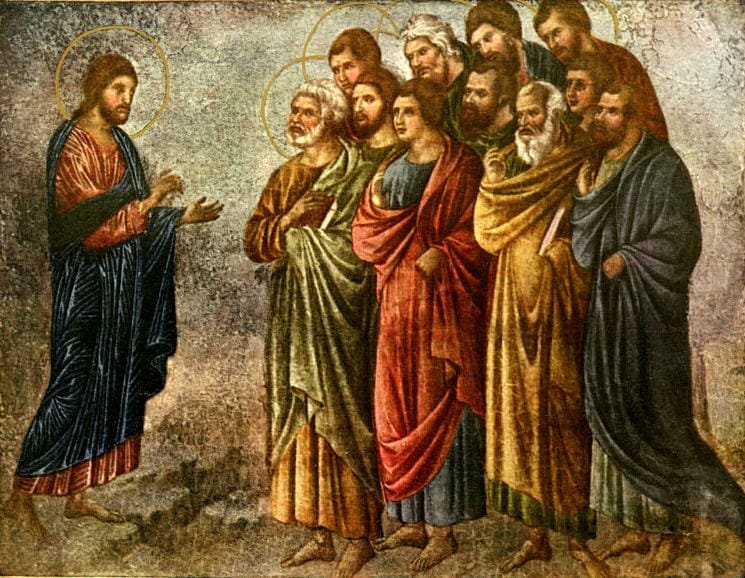
This Sunday’s Gospel (Mk 6:1-6) tells us about the disbelief of Jesus’s fellow villagers. After preaching in other villages in Galilee, Jesus returned to Nazareth where he had grown up with Mary and Joseph; and, one sabbath, he began to teach in the synagogue. Many who were listening asked themselves: “Where does he get all this wisdom? But, isn’t he the son of the carpenter and Mary, that is, of our neighbours that we know so well?” (cf. vv. 1-3). Confronted with this reaction, Jesus confirms the truth that had even become a part of popular wisdom: “A prophet is not without honour, except in his own country, and among his own kin, and in his own house” (v. 4). We say this many times…
Let us reflect on the attitude of Jesus’s fellow villagers. We could say they knew Jesus, but they did not recognise him. There is a difference between knowing and recognizing. In essence, this difference makes us understand that we can know various things about a person, form an idea, rely on what others say about that person, we might perhaps meet that person every now and then in the neighbourhood; but all that is not enough. This is a knowledge, I would say ordinary, superficial, that does not recognise the uniqueness of the person. We all run this risk: we think we know so much about a person, even worse, we use labels and close the person within our own prejudices. Jesus’s fellow villagers knew him for thirty years in the same way and they thought they knew everything! “But isn’t this the boy we saw growing up, the son of the carpenter and Mary? Where do these things come from?”. The distrust…in reality, they never realised who Jesus truly was. They remained at the exterior level and refused what was new about Jesus.
And here, we enter into the true crux of the problem: when we allow the convenience of habit and the dictatorship of prejudice to have the upper hand, it is difficult to open ourselves to what is new and allow ourselves to be amazed. We control: through attitudes, through prejudices… It often happens in life that we seek from our experiences and even from people only what conforms to our own ideas and ways of thinking so as never to have to make an effort to change. And this can even happen with God, and even to us believers, to us who think we know Jesus, that we already know so much about Him and that it is enough to repeat the same things as always. And this is not enough with God. But without openness to what is new and, above all – listen well – openness to God’s surprises, without amazement, faith becomes a tiring litany that slowly dies out and becomes a habit, a social habit.
I said a word: amazement. What is amazement? Amazement happens when we meet God: “I met the Lord”. But we read in the Gospel: many times the people who encountered Jesus and recognised him felt amazed. And we, by encountering God, must follow this path: to feel amazement. It is like the guarantee certificate that the encounter is true and not habitual.
In the end, why didn’t Jesus’s fellow villagers recognise and believe in Him? But why? What is the reason? In a few words, we can say that they did not accept the scandal of the Incarnation. They did not know this mystery of the Incarnation, but they did not accept the mystery: they did not know it. They did not know the reason and they thought it was scandalous that the immensity of God should be revealed in the smallness of our flesh, that the Son of God should be the son of a carpenter, that the divine should be hidden in the human, that God should inhabit a face, the words, the gestures of a simple man. This is the scandal: the incarnation of God, his concreteness, his ‘daily life’. And God became concrete in a man, Jesus of Nazareth, he became a companion on the way, he made himself one of us. “You are one of us”, we can say to Jesus. What a beautiful prayer! It is because one of us understands us, accompanies us, forgives us, loves us so much. In reality, an abstract, distant god is more comfortable, one that doesn’t get himself involved in situations and who accepts a faith that is far from life, from problems, from society. Or we would even like to believe in a ‘special effects’ god who does only exceptional things and always provokes strong emotions. Instead, brothers and sisters, God incarnated Himself: God is humble, God is tender, God is hidden, he draws near to us, living the normality of our daily life.
And then, the same thing happens to us like Jesus’s fellow villagers, we risk that when he passes by, we will not recognize him. I repeat that beautiful phrase from Saint Augustine: “I am afraid of God, of the Lord, when he passes by”. But, Augustine, why are you afraid? “I am afraid of not recognising him. I am afraid that when the Lord passes by:Timeo Dominum transeuntem. We do not recognize him, we are scandalised by Him, we think with our hearts about this reality.
Now, in prayer, let us ask the Madonna, who welcomed the mystery of God in her daily life in Nazareth, for eyes and hearts free of prejudices and to have eyes open to be amazed: “Lord that we might meet you!”, and when we encounter the Lord there is this amazement. We meet him in the normal: eyes open to God’s surprises, at His humble and hidden presence in daily life.
Copyright © Dicastero per la Comunicazione – Libreria Editrice Vaticana
SOURCE: https://www.vatican.va/content/francesco/en/angelus/2021/documents/papa-francesco_angelus_20210704.html
EMPHASIS MINE.
ANGELUS
Saint Peter’s Square
Sunday, 8 July 2018
Dear Brothers and Sisters Good Morning!
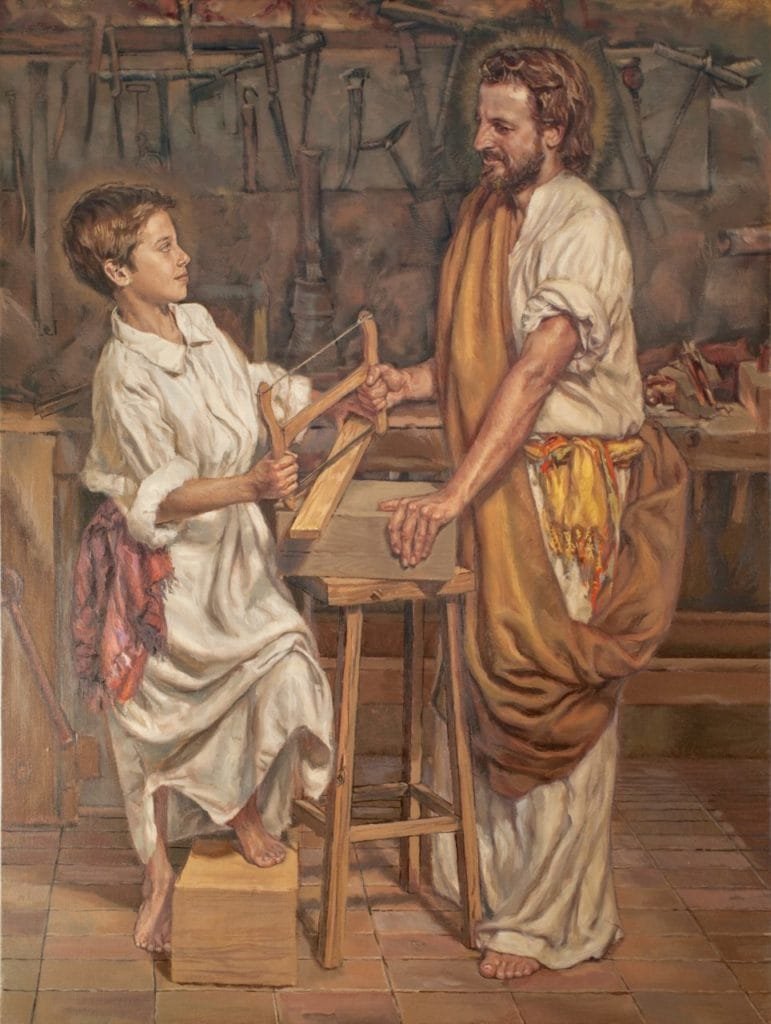
Today’s Gospel passage (cf. Mk 6:1-6, [14TH SUNDAY IN ORDINARY TIME YEAR B]) narrates the story of when Jesus returns to Nazareth and begins to teach in the synagogue on a Saturday. Ever since he had left it and begun preaching in the nearby hamlets and villages, he had never again set foot in his country. He has returned. Therefore, the whole town must have been there to listen to this son of theirs, whose fame as a wise master and powerful healer had by now spread throughout Galilee and beyond. But what could have stood out as a success, turned into a resounding rejection, to such an extent that Jesus could not perform any mighty work but only a few healings (cf. v. 5). The dynamics of that day are reconstructed in detail by Mark, the Evangelist: At first the people of Nazareth listen [to him] and are astonished; then perplexed, they ask themselves “Where did this man get all this?”, this wisdom? and in the end they take offence, recognizing him as the carpenter, Mary’s son whom they had seen grow up (cf v. 2-3). Thus Jesus sums it up with the expression which has become proverbial: “A prophet is not without honours, except in his own country” (v. 4).
We may ask ourselves: why do Jesus’ fellow townsmen go from astonishment to disbelief? They make a comparison between Jesus’ humble origins and his current abilities: he is a carpenter; he did not study and yet he preaches better than the scribes and he performs miracles. And instead of opening up to the reality, they take offence. According to the people of Nazareth, God is too great to humble himself to speak through such a simple man! It is the scandal of the Incarnation: the unsettling event of a God made flesh who thinks with the mind of a man, works and acts with the hands of a man, loves with a human heart, a God who struggles, eats and sleeps like one of us. The Son of God overturns every human framework: it is not the disciples who washed the feet of the Lord, but it is the Lord who washed the feet of the disciples (cf. Jn 13:1-20). This is a reason for scandal and incredulity, not only in that period, but in all ages, even today.
The radical change Jesus brought about commits his disciples of both yesterday and today to a personal and community [self] examination. Indeed, even in our day it can happen that we harbour some prejudices that prevent us from seeing reality. But, today, the Lord asks us to adopt an attitude of humble listening and docile expectation because God’s grace often manifests itself in surprising ways that do not match our expectations. Together, let us think about Mother Teresa of Calcutta, for example. A tiny sister — no one took her very seriously — who went around the streets to gather up the dying so that they could have a dignified death. With prayer and her work, this tiny sister performed wonders! A small woman revolutionized charity work in the Church. She sets an example for our times. God does not conform to human prejudices. We must make an effort to open our heart and mind to welcome the divine reality which comes to encounter us. It is a case of having faith: lack of faith is an obstacle to God’s grace. Many people who have been baptized live as though Christ did not exist. They repeat the gestures and the signs of faith but these do not correspond to a true bond with Jesus’ person and his Gospel. Each Christian — all of us, each of us — is called to deepen this fundamental belonging, and try to bear witness to it with a consistent conduct in life, always motivated by charity.
Through the intercession of the Virgin Mary, let us ask the Lord to melt the hardness of hearts and the narrowness of minds so that we can be open to his grace, to his truth and to his mission of goodness and mercy which is addressed to all, with no exception.
FOR THE 14TH SUNDAY IN ORDINARY TIME YEAR B MASS PRAYERS AND READINGS, CLICK HERE.
HOMILY REFLECTION FOR THE 14TH SUNDAY IN ORDINARY TIME YEAR B, CLICK HERE.
Stay updated: subscribe by email for free TO OUR NEW WEBSITE www.catholicsstrivingforholiness.org (PUT YOUR EMAIL IN THE SUBSCRIBE WIDGET).
We are also in www.fb.com/Catholicsstrivingforholiness. Kindly help more people in their Christian life by liking our page and inviting your family, friends and relatives to do so as well. Thanks in advance and God bless you and your loved ones! Fr. Rolly Arjonillo