Dec. 31 MASS READINGS, GOSPEL COMMENTARY AND READING.
DEC. 31 MASS READINGS
Seventh Day of the Octave.
READING I
1 Jn 2:18–21
Children, it is the last hour; and just as you heard that the antichrist was coming, so now many antichrists have appeared. Thus we know this is the last hour. They went out from us, but they were not really of our number; if they had been, they would have remained with us. Their desertion shows that none of them was of our number. But you have the anointing that comes from the Holy One, and you all have knowledge. I write to you not because you do not know the truth but because you do, and because every lie is alien to the truth.
The reader acclaims: The Word of the Lord. All reply: Thanks be to God, Deo grátias.
RESPONSORIAL PSALM
R.Let the heavens be glad and the earth rejoice!
Læténtur cæli et exsúltet terra.
Sing to the Lord a new song;
sing to the Lord, all you lands.
Sing to the Lord; bless his name;
announce his salvation, day after day.
R.Let the heavens be glad and the earth rejoice!
Læténtur cæli et exsúltet terra.
Let the heavens be glad and the earth rejoice;
let the sea and what fills it resound;
let the plains be joyful and all that is in them!
Then shall all the trees of the forest exult before the Lord.
R. Let the heavens be glad and the earth rejoice!
Læténtur cæli et exsúltet terra.
The Lord comes,
he comes to rule the earth.
He shall rule the world with justice
and the peoples with his constancy.
R. Let the heavens be glad and the earth rejoice!
Læténtur cæli et exsúltet terra.
ALLELUIA
Verbum caro factum est, et habitávit in nobis. Quotquot recepérunt eum, dedit eis potestátem fílios Dei fíeri.
The Word of God became flesh and dwelt among us. To those who accepted him he gave power to become the children of God.
R. Alleluia.
GOSPEL
Jn 1:1–18
In the beginning was the Word, and the Word was with God, and the Word was God. He was in the beginning with God. All things came to be through him, and without him nothing came to be. What came to be through him was life, and this life was the light of the human race; the light shines in the darkness, and the darkness has not overcome it.
A man named John was sent from God. He came for testimony, to testify to the light, so that all might believe through him. He was not the light, but came to testify to the light. The true light, which enlightens everyone, was coming into the world.
He was in the world, and the world came to be through him, but the world did not know him. He came to what was his own, but his own people did not accept him.
But to those who did accept him he gave power to become children of God, to those who believe in his name, who were born not by natural generation nor by human choice nor by a man’s decision but of God.
And the Word became flesh and made his dwelling among us, and we saw his glory, the glory as of the Father’s only-begotten Son, full of grace and truth.
John testified to him and cried out, saying, “This was he of whom I said, ‘The one who is coming after me ranks ahead of me because he existed before me.’” From his fullness we have all received, grace in place of grace, because while the law was given through Moses, grace and truth came through Jesus Christ. No one has ever seen God. The only-begotten Son, God, who is at the Father’s side, has revealed him.
GOSPEL COMMENTARYFROM THE NAVARRE BIBLE, COMMENTARY TO THE GOSPEL OF ST. JOHN
- 10 The Word is in this world as the maker who controls what he has made (cf. St Augustine, In Ioann. Evang., 2, 10). In St John’s Gospel the term “world” means “all creation, all created things (including all mankind)”: thus, Christ came to save all mankind: “For God so loved the world that he gave his only Son, that whoever believes in him should not perish but have eternal life. For God sent the Son into the world, not to condemn the world, but that the world might be saved through him” (Jn 3:16-17). But insofar as many people have rejected the Light, that is, rejected Christ, “world” also means everything opposed to God (cf. Jn 17:14-15). Blinded by their sins, men do not recognize in the world the hand of the Creator (cf. Rom 1:18-20; Wis 13:1-15): “they become attached to the world and relish only the things that are of the world” (St John Chrysostom, Hom. on St John, 7). But the Word, “the true light”, comes to show us the truth about the world (cf. Jn 1:3; 18:37) and to save us.
- 11 “His own home, his own people”: this means, in the first place, the Jewish people, who were chosen by God as his own personal “property”, to be the people from whom Christ would be born. It can also mean all mankind, for mankind is also his: he created it and his work of redemption extends to everyone. So the reproach that they did not receive the Word made man should be understood as addressed not only to the Jews but to all these who reject God despite his calling them to be his friends: “Christ came; but by a mysterious and terrible misfortune, not everyone accepted him… It is the picture of humanity before us today, after twenty centuries of Christianity. How did this happen? What shall we say? We do not claim to fathom a reality immersed in mysteries that transcend us — the mystery of good and evil. But we can recall that the economy of Christ, for its light to spread, requires a subordinate but necessary cooperation on the part of man — the cooperation of evangelization, of the apostolic and missionary Church. If there is still work to be done, it is all the more necessary for everyone to help her” (Paul VI, General Audience, 4 December 1974).
- 12 Receiving the Word means accepting him through faith, for it is through faith that Christ dwells in our hearts (cf. Eph 3:17). Believing in his name means believing in his Person, in Jesus as the Christ, the Son of God. In other words, “those who believe in his name are those who fully hold the name of Christ, not in any way lessening his divinity or his humanity” (St Thomas Aquinas, Commentary on St John, in loc.).
- “He gave power [to them]” is the same as saying “he gave them a free gift” — sanctifying grace — “because it is not in our power to make ourselves sons of God” (ibid.). This gift is extended through Baptism to everyone, whatever his race, age, education etc. (cf. Acts 10:45; Gal 3:26). The only condition is that we have faith.
- “The Son of God became man”, St Athanasius explains, “in order that the Sons of men, the sons of Adam, might become sons of God. . . . He is the Son of God by nature; we, by grace” (De Incarnatione contra arrianos). What is referred to here is birth to supernatural life: in which “Whether they be slaves or freemen, whether Greeks or barbarians or Scythians, foolish or wise, female or male, children or old men, honourable or without honour, rich or poor, rulers or private citizens, all, he meant, would merit the same honour. . . . Such is the power of faith in him; such the greatness of his grace” (St John Chrysostom, Horn. on St John, 10, 2).
- “Christ’s union with man is power and the source of power, as St John stated so incisively in the prologue of his Gospel: ‘(The Word) gave power to become children of God’. Man is transformed inwardly by this power as the source of a new life that does not disappear and pass away but lasts to eternal life (cf. Jn 4:14)” (John Paul II, Redemptor hominis, 18).
- 13 The birth spoken about here is a real, spiritual type of generation which is effected in Baptism (cf. 3:6ff). Instead of the plural adopted here, referring to the supernatural birth of men, some Fathers and early translations read it in the singular: “who was born, not of blood . . . but of God”, in which case the text would refer to the eternal generation of the Word and to Jesus’ generation through the Holy Spirit in the pure womb of the Virgin Mary. Although the second reading is very attractive, the documents (Greek manuscripts, early translations, references in the works of ecclesiastical writers, etc.) show the plural text to be the more usual, and the one that prevailed from the fourth century forward. Besides, in St John’s writings we frequently find reference to believers as being born of God (cf. Jn 3:3-6; 1 Jn 2:29; 3:9; 4:7; 5:1, 4, 18).
- The contrast between man’s natural birth (by blood and the will of man) and his supernatural birth (which comes from God) shows that those who believe in Jesus Christ are made children of God not only by their creation but above all by the free gift of faith and grace.
- 14 This is a text central to the mystery of Christ. It expresses in a very condensed form the unfathomable fact of the Incarnation of the Son of God. “When the time had fully come, God sent forth his Son, born of woman” (Gal 4:4).
- The word “flesh” means man in his totality (cf. Jn 3:6; 17:2; Gen 6:3; Ps 56:5); so the sentence “the Word became flesh” means the same as “the Word became man.” The theological term “Incarnation” arose mainly out of this text. The noun “flesh” carries a great deal of force against heresies which deny that Christ is truly man. The word also accentuates that our Saviour, who dwelt among us and shared our nature, was capable of suffering and dying, and it evokes the “Book of the Consolation of Israel” (Is 40:1-11), where the fragility of the flesh is contrasted with the permanence of the Word of God: “The grass withers, the flower fades; but the Word of our God will stand for ever” (Is 40:8). This does not mean that the Word’s taking on human nature is something precarious and temporary.
- “And dwelt among us”: the Greek verb which St John uses originally means “to pitch one’s tent”, hence, to live in a place. The careful reader of Scripture will immediately think of the tabernacle, or tent, in the period of the exodus from Egypt, where God showed his presence before all the people of Israel through certain signs of his glory such as the cloud covering the tent (cf. for example, Ex 25:8; 40:34-35). In many passages of the Old Testament it is announced that God “will dwell in the midst of the people” (cf. for example, Jer 7:3; Ezek 43:9; Sir 24:8). These signs of God’s presence, first in the pilgrim Tent of the Ark in the desert and then in the Temple of Jerusalem, are followed by the most wonderful form of God’s presence among us — Jesus Christ, perfect God and perfect Man, in whom the ancient promise is fulfilled in a way that far exceeded men’s greatest expectations. Also the promise made through Isaiah about the “Immanuel” or “God-with-us” (Is 7:14; cf. Mt 1:23) is completely fulfilled through this dwelling of the Incarnate Son of God among us. Therefore, when we devoutly read these words of the Gospel “and dwelt among us” or pray them during the Angelus, we have a good opportunity to make an act of deep faith and gratitude and to adore our Lord’s most holy human nature.
- “Remembering that ‘the Word became flesh’, that is, that the Son of God became man, we must become conscious of how great each man has become through this mystery, through the Incarnation of the Son of God! Christ, in fact, was conceived in the womb of Mary and became man to reveal the eternal love of the Creator and Father and to make known the dignity of each one of us” (John Paul II, Angelus Address at Jasna Gora Shrine, 5 June 1979).
- Although the Word’s self-emptying by assuming a human nature concealed in some way his divine nature, of which he never divested himself, the Apostles did see the glory of his divinity through his human nature: it was revealed in the Transfiguration (Lk 9:32-35), in his miracles (Jn 2:11; 11:40), and especially in his Resurrection (cf. Jn 3:11; 1 Jn 1:1). The glory of God, which shone out in he early Tabernacle in the desert and in the Temple at Jerusalem, was nothing hut an imperfect anticipation of the reality of God’s glory revealed through the holy human nature of the Only-begotten of the Father. St John the Apostle speaks n a very formal way in the first person plural: “we have beheld his glory”, because he counts himself among the witnesses who lived with Christ and, in particular, were present at his Transfiguration and saw the glory of his Resurrection.
- The words “only Son” (“Only-begotten”) convey very well the eternal and unique generation of the Word by the Father. The first three Gospels stressed Christ’s birth in time; St John complements this by emphasizing his eternal generation.
- The words “grace and truth” are synonyms of “goodness and fidelity”, two attributes which, in the Old Testament, are constantly applied to Yahweh (cf., for example, Ex 34:6; Ps 117; Ps 136; Hos 2: 16-22): so, grace is the expression of God’s love for men, the way he expresses his goodness and mercy. Truth implies permanence, loyalty, constancy, fidelity. Jesus, who is the Word of God made man, that is, God himself, is therefore “the only Son of the Father, full of grace and truth”; he is the “merciful and faithful high priest” (Heb 2:17). These two qualities, being good and faithful, are a kind of compendium or summary of Christ’s greatness. And they also parallel, though on an infinitely lower level, the quality essential to every Christian, as stated expressly by our Lord when he praised the “good and faithful servant” (Mt 25:21).
- As Chrysostom explains: “Having declared that they who received him were ‘born of God’ and ‘become sons of God,’ he then set forth the cause and reason for this ineffable honour. It is that ‘the Word became flesh’ and the Master took on the form of a slave. He became the Son of Man, though he was the true Son of God, in order that he might make the sons of men children of God” (Horn. on St John, 11,1).
- The profound mystery of Christ was solemnly defined by the Church’s Magisterium in the famous text of the ecumenical council of Chalcedon (in the year 451): “Following the holy Fathers, therefore, we all with one accord teach the profession of faith in the one identical Son, our Lord Jesus Christ. We declare that he is perfect both in his divinity and in his humanity, truly God and truly man, composed of body and rational soul; that he is consubstantial with the Father in his divinity, consubstantial with us in his humanity, like us in every respect except for sin (cf. Heb 4:15). We declare that in his divinity he was begotten in this last age of Mary the Virgin, the Mother of God, for us and for our salvation” (Dz-Sch, 301)
VIDEO COMMENTARY
TOPIC: WAS 2020 THE BEST OR THE WORST YEAR FOR YOU?
Today is the last day of 2020. The proper thing to do is to reflect during our prayer time and quiet moments what 2020 has been to and what it has done for us. The readings give us an indication (1 John 2:18-21, John 1:1-18). They talk about ENDINGS AND BEGINNINGS. As we reflect on the joys and pains of 2020, we are always grateful, for the the Lord’s will is always good. We look to 2021 with the same attitude in our Responsorial Psalm ( Psalm 96:1-2, 11-12, 13), with praise and hope.
CHRISTMAS READING
The birthday of the Lord is the birthday of peace by Pope St. Leo the Great
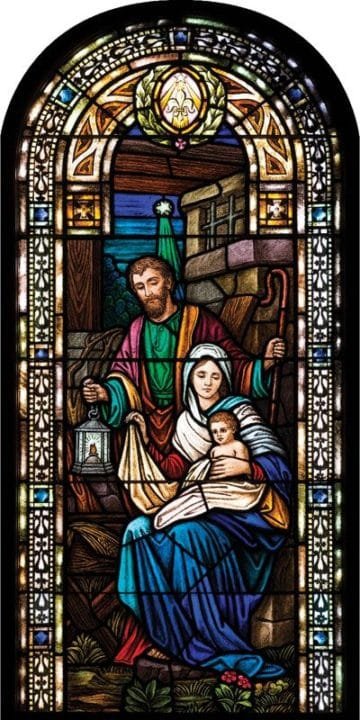
God’s Son did not disdain to become a baby. Although with the passing of the years he moved from infancy to maturity, and although with the triumph of his passion and resurrection all the actions of humility which he undertook for us were finished, still today’s festival renews for us the holy childhood of Jesus born of the Virgin Mary. In adoring the birth of our Saviour, we find we are celebrating the commencement of our own life, for the birth of Christ is the source of life for Christian folk, and the birthday of the Head is the birthday of the body.
Every individual that is called has his own place, and all the sons of the Church are separated from one another by intervals of time. Nevertheless, just as the entire body of the faithful is born in the font of baptism, crucified with Christ in his passion, raised again in his resurrection, and placed at the Father’s right hand in his ascension, so with Him are they born in this nativity. For this is true of any believer in whatever part of the world, that once he is reborn in Christ he abandons the old paths of his original nature and passes into a new man by being reborn. He is no longer counted as part of his earthly father’s stock but among the seed of the Saviour, who became the Son of man in order that we might have the power to be the sons of God.
For unless He came down to us in this humiliation, no one could reach his presence by any merits of his own. The very greatness of the gift conferred demands of us reverence worthy of its splendour. For, as the blessed Apostle teaches, We have received not the spirit of this world but the Spirit which is of God, that we may know the things which are given us by God. That Spirit can in no other way be rightly worshipped, except by offering him that which we received from him.
But in the treasures of the Lord’s bounty what can we find so suitable to the honour of the present feast as the peace which at the Lord’s nativity was first proclaimed by the angel-choir? For it is that peace which brings forth the sons of God. That peace is the nurse of love and the mother of unity, the rest of the blessed and our eternal home. That peace has the special task of joining to God those whom it removes from the world. So those who are born not of blood nor of the will of the flesh nor of the will of man but of God must offer to the Father the unanimity of peace-loving sons, and all of them, adopted parts of the mystical Body of Christ, must meet in the First-Begotten of the new creation. He came to do not his own will but the will of the one who sent him; and so too the Father in his gracious favour has adopted as his heirs not those that are discordant nor those that are unlike him, but those that are one with him in feeling and in affection. Those who are re-modelled after one pattern must have a spirit like the model.
The birthday of the Lord is the birthday of peace: for thus says the Apostle, He is our peace, who made both one; because whether we are Jew or Gentile, through Him we have access in one Spirit to the Father.
The Word spoke first of all through the prophets, but because the message was couched in such obscure language that it could be only dimly apprehended, in the last days the Father sent the Word in person, commanding him to show himself openly so that the world could see him and be saved.
We know that by taking a body from the Virgin he re-fashioned our fallen nature. We know that his manhood was of the same clay as our own; if this were not so, he would hardly have been a teacher who could expect to be imitated. If he were of a different substance from me, he would surely not have ordered me to do as he did, when by my very nature I am so weak. Such a demand could not be reconciled with his goodness and justice.
No. He wanted us to consider him as no different from ourselves, and so he worked, he was hungry and thirsty, he slept. Without protest he endured his passion, he submitted to death and revealed his resurrection. In all these ways he offered his own manhood as the first fruits of our race to keep us from losing heart when suffering comes our way, and to make us look forward to receiving the same reward as he did, since we know that we possess the same humanity.
When we have come to know the true God, both our bodies and our souls will be immortal and incorruptible. We shall enter the kingdom of heaven, because while we lived on earth we acknowledged heaven’s King. Friends of God and co-heirs with Christ, we shall be subject to no evil desires or inclinations, or to any affliction of body or soul, for we shall have become divine.
Whatever evil you may have suffered, being man, it is God that sent it to you, precisely because you are man; but equally, when you have been deified, God has promised you a share in every one of his own attributes. The saying Know yourself means therefore that we should recognise and acknowledge in ourselves the God who made us in his own image, for if we do this, we in turn will be recognised and acknowledged by our Maker.
So let us not be at enmity with ourselves, but change our way of life without delay. For Christ who is God, exalted above all creation, has taken away man’s sin and has re-fashioned our fallen nature. In the beginning God made man in his image and so gave proof of his love for us. If we obey his holy commands and learn to imitate his goodness, we shall be like him and he will honour us. God is not beggarly, and for the sake of his own glory he has given us a share in his divinity.
COLLECT
Almighty ever-living God, who in the Nativity of your Son established the beginning and fulfillment of all religion, grant, we pray, that we may be numbered among those who belong to him in whom is the fullness of human salvation. Who lives and reigns with you.
Stay updated: subscribe by email for free TO OUR NEW WEBSITE www.catholicsstrivingforholiness.org (PUT YOUR EMAIL IN THE SUBSCRIBE WIDGET).
We are also in www.fb.com/Catholicsstrivingforholiness. Kindly help more people in their Christian life by liking our page and inviting your family, friends and relatives to do so as well. Thanks in advance and God bless you and your loved ones! Fr. Rolly Arjonillo