POPE FRANCIS ON THE 17TH SUNDAY IN ORDINARY TIME YEAR C
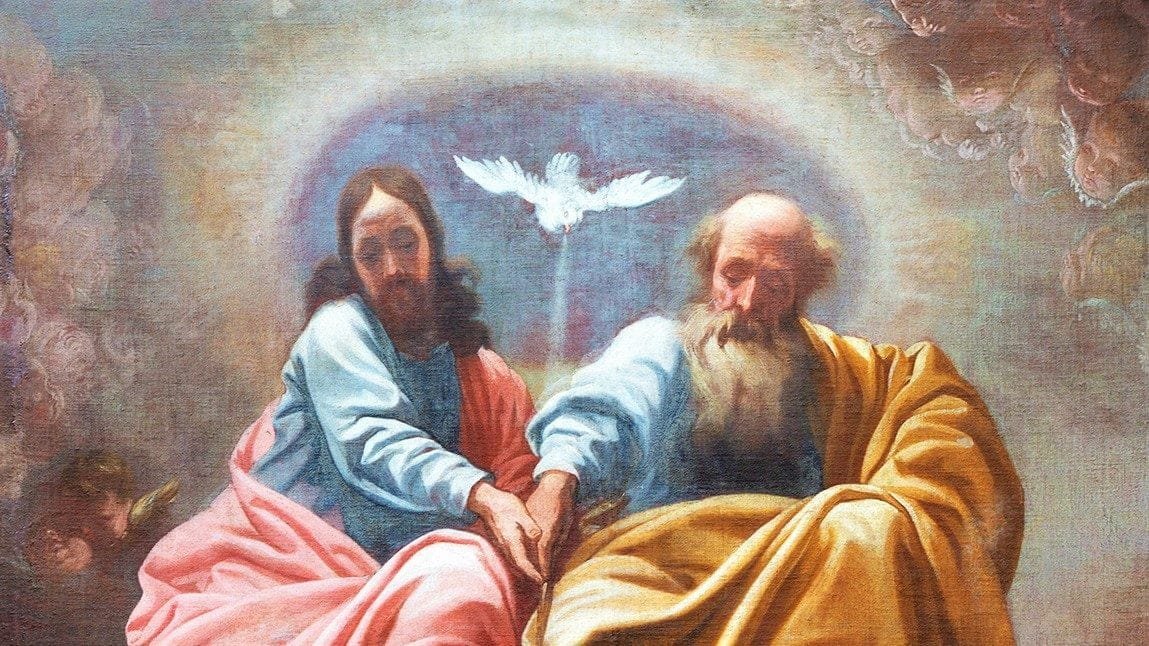
ANGELUS
Saint Peter’s Square
17th Sunday in Ordinary Time C, 28 July 2019
Dear Brothers and Sisters, Good morning!
In today’s Gospel passage (cf. Lk 11:1-13), Saint Luke narrates the circumstances in which Jesus teaches the “Lord’s Prayer”. They, the disciples, already know how to pray by reciting the formulas of the Jewish tradition, but they too wish to experience the same “quality” of Jesus’ prayer because they can confirm that prayer is an essential dimension in their Master’s life. Indeed each of his important actions is marked by long pauses in prayer. Moreover, they are fascinated because they see that he does not pray like the other teachers of the time, but rather his prayer is an intimate bond with the Father, so much so that they wish to be a part of these moments of union with God, in order to completely savour its sweetness.
Thus, one day they wait for Jesus to finish praying in a secluded place and then they ask him: “Lord, teach us to pray” (v. 1). In responding to the disciples’ explicit question, Jesus does not provide an abstract definition of prayer, nor does he teach an efficient technique to pray in order to “obtain” something. Instead, he invites his own to experience prayer, by putting them directly in communication with the Father, causing them to feel nostalgic for a personal relationship with God, with the Father. Herein lies the novelty of Christian prayer! It is a dialogue between people who love each other, a dialogue based on trust, sustained by listening and open to a commitment to solidarity. It is the dialogue of a Son with his Father, a dialogue between children and their Father. This is Christian prayer.
Hence, he delivers the “Lord’s Prayer” to them, perhaps the most precious gift left to us by the Divine Master during his earthly mission. After revealing to us his mystery as Son and brother, with that prayer Jesus allows us to enter into God’s paternity. I want to underscore this: when Jesus teaches us the “Our Father”, he allows us to enter into God’s paternity and he points the way to enter into a prayerful and direct dialogue with him, through the path of filial intimacy. It is a dialogue between a father and his son, of a son with his father. What we ask in the “Our Father” is already fulfilled for us in his Only-begotten Son: the sanctification of the Name, the advent of the Kingdom, the gift of bread, of forgiveness and of delivery from evil. As we ask, we open our hand to receive; to receive the gifts that the Father has shown us in his Son. The prayer that the Lord taught us is the synthesis of every prayer and we address it to the Father, always in communion with our brothers and sisters. Sometimes distractions can occur in prayer, but we often feel the need to stop at the first word, “Father”, and feel that paternity in our heart.
Jesus then recounts the parable of the importune friend and Jesus says: “we must persevere in prayer”. My thoughts turn to what children do when they are three-and-a-half years old: they begin to ask about things they do not understand. In my country, it is called “the ‘why’ age”, I think it is also the same here. Children begin to look at their father and ask: Why Dad? Why Dad? They ask for explanations. Let us be careful: when the father begins to explain why, they come up with another question without listening to the entire explanation. What is happening? Children feel insecure about many things that they are only partially beginning to understand. They only wish to attract the father’s gaze, and thus the “why, why, why?”. If we pause on the first word of the “Our Father”, we will be doing the same as when we were children: attracting the father’s gaze upon us: saying, “Father, Father” and also asking, “why?”, and he will look at us.
Let us ask Mary, woman of prayer to help us pray the “Our Father” in unity with Jesus in order to live the Gospel guided by the Holy Spirit.
Source: https://www.vatican.va/content/francesco/en/angelus/2019/documents/papa-francesco_angelus_20190728.html
Emphasis mine.
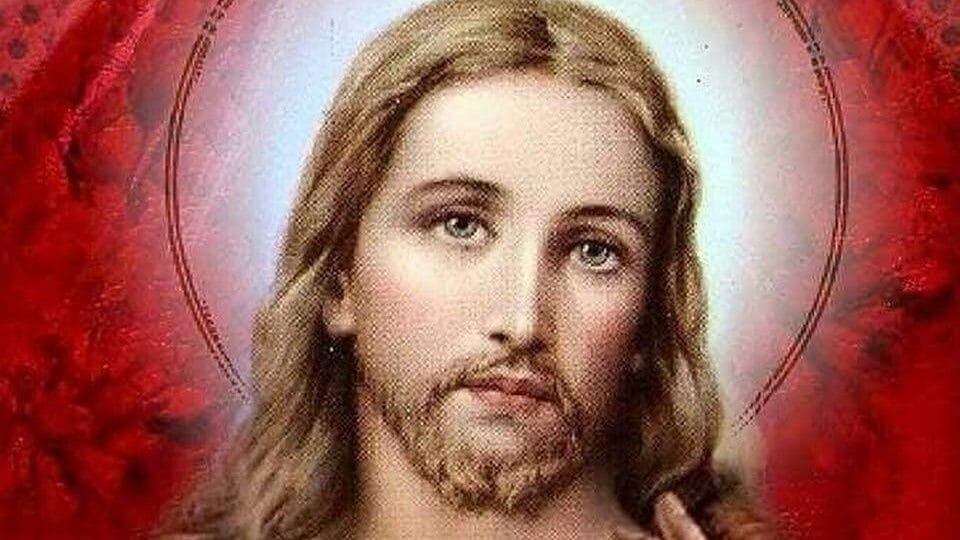
ANGELUS
Saint Peter’s Square
17th Sunday in Ordinary Time C, 24 July 2016
Dear Brothers and Sisters, Good morning!
The Gospel this Sunday (Lk 11:1-13) opens with the scene of Jesus who is praying alone, apart from the others; when he finishes, the disciples ask him: “Lord, teach us to pray” (v. 1); and He says in reply, “When you pray, say: ‘Father…’”(v. 2). This word is the “secret” of Jesus’ prayer, it is the key that he himself gives to us so that we too might enter into that relationship of confidential dialogue with the Father who accompanied and sustained his whole life.
With the name “Father” Jesus combines two requests: “hallowed be Thy name, Thy kingdom come” (v. 2). Jesus’ prayer, and the Christian prayer therefore, first and foremost, makes room for God, allowing him to show his holiness in us and to advance his kingdom, beginning with the possibility of exercising his Lordship of love in our lives.
Three other supplications complete this prayer that Jesus taught, the “Our Father”. There are three questions that express our basic needs: bread, forgiveness and help in temptation (cf. vv. 3-4). One cannot live without bread, one cannot live without forgiveness and one cannot live without God’s help in times of temptation. The bread that Jesus teaches us to ask for is what is necessary, not superfluous. It is the bread of pilgrims, the righteous, a bread that is neither accumulated nor wasted, and that does not weigh us down as we walk. Forgiveness is, above all, what we ourselves receive from God: only the awareness that we are sinners forgiven by God’s infinite mercy can enable us to carry out concrete gestures of fraternal reconciliation. If a person does not feel that he/she is a sinner who has been forgiven, that person will never be able to make a gesture of forgiveness or reconciliation. It begins in the heart where you feel that you are a forgiven sinner. The last supplication, “lead us not into temptation”, expresses the awareness of our condition, which is always exposed to the snares of evil and corruption. We all know what temptation is!
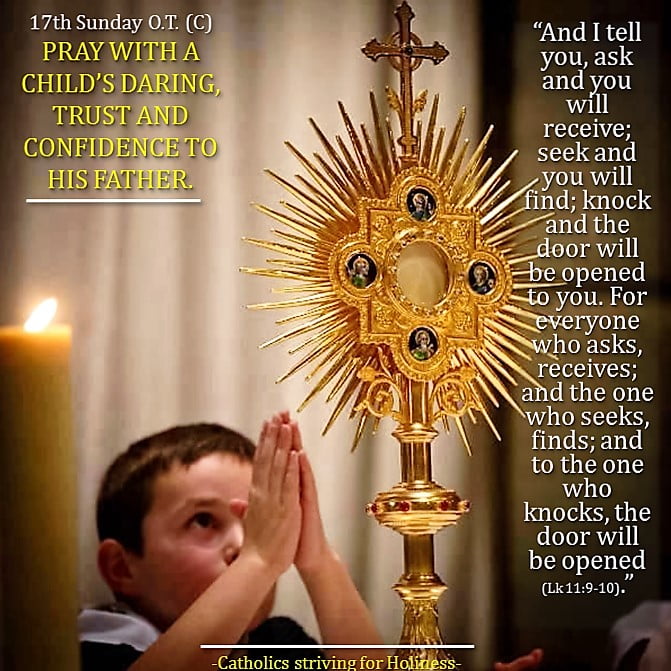
Jesus’ teaching on prayer continues with two parables, which he modelled on the behaviour of a friend towards another friend, and that of a father towards his son (cf. vv. 5-12). Both are intended to teach us to have full confidence in God, who is Father. He knows our needs better than we do ourselves, but he wants us to present them to him boldly and persistently, because this is our way of participating in his work of salvation. Prayer is the first and principle “working instrument” we have in our hands! In being persistent with God, we don’t need to convince him, but to strengthen our faith and our patience, meaning our ability to strive together with God for the things that are truly important and necessary. In prayer there are two of us: God and I, striving together for the important things.
Among these, there is one, the great important thing that Jesus speaks of in today’s Gospel, which we almost never ask for, and that is the Holy Spirit. “Give me the Holy Spirit…!” And Jesus says, “If you then, who are evil, know how to give good gifts to your children, how much more will the heavenly Father give the Holy Spirit to those who ask him for it!” (v. 13). The Holy Spirit! We must ask that the Holy Spirit comes within us. But what is the use of the Holy Spirit? We need him to live well, to live with wisdom and love, doing God’s will. What a beautiful prayer it would be if, this week, each of us were to ask the Father: “Father, give me the Holy Spirit!”. Our Lady demonstrates this with her life, which was entirely enlivened by the Spirit of God. May She, united to Jesus, help us to pray to the Father so that we might not live in a worldly manner, but according to the Gospel, guided by the Holy Spirit.
Stay updated: subscribe by email for free TO OUR NEW WEBSITE www.catholicsstrivingforholiness.org (PUT YOUR EMAIL IN THE SUBSCRIBE WIDGET).
We are also in www.fb.com/Catholicsstrivingforholiness. Kindly help more people in their Christian life by liking our page and inviting your family, friends and relatives to do so as well. Thanks in advance and God bless you and your loved ones! Fr. Rolly Arjonillo