HOMILY FOR THE 15TH SUNDAY IN ORDINARY TIME YEAR C. COMPASSION: FINDING GOD IN EVERY NEIGHBOR

Dear brethren in Christ,
Today’s readings invite us on a journey – a journey not to a distant land, but into the very heart of our faith and our daily lives. They speak of a God who is not far off, of Our Lord Jesus Christ who holds all things together, and an authentic love that calls us to action, right here, right now.
God is Closer Than You Think
Our first reading from Deuteronomy reminds us of a liberating truth: God’s command is not some mysterious secret hidden in the heavens or across the sea. Moses declares:
“For this command, which I enjoin on you today, is not too mysterious and remote for you. It is not up in the sky, that you should say, ‘Who will go up in the sky to get it for us and tell us of it, that we may observe it?’ Nor is it across the sea, that you should say, ‘Who will cross the sea to get it for us and tell us of it, that we may observe it?’ No, it is something very near to you, in your mouth and in your heart, you have only to carry it out.” (Deuteronomy 30:11-14).
- This passage speaks to a common misconception: that God is a distant being and His Will, too difficult to decipher for us.
- But Moses tells us God and His Will is in our heart– it’s intuitive, accessible. God counts on each one of us to seek Him, to strive for holiness and make Him known to others as well.
Saint Thérèse of Lisieux, a young Carmelite nun who lived a seemingly ordinary life within the confines of her monastery developed her own “Little Way,” a path to holiness accessible to everyone.
- She didn’t perform grand miracles or engage in extensive theological debates. Instead, she believed that holiness does not consist in heroic deeds, but “consists simply in doing God’s will, and being just what God wants us to be.”She wrote: “Love proves itself by deeds, so how am I to show my love? Great deeds are forbidden me. The only way I can prove my love is by scattering flowers and these flowers are every little sacrifice, every glance and word, and the doing of the least actions for love. (The Story of a Soul).”
- For Thérèse, God’s command was indeed “very near,” found in every humble duty, every act of kindness, every patient endurance of suffering. Her life showed that holiness is not remote, but intimately woven into the fabric of daily life, waiting to be lived out with love.
Saint Josemaria Escriva, with his profound emphasis on sanctifying ordinary life, would often remind us that “There is something holy, something divine, hidden in the most ordinary situations, and it is up to each one of you to discover it.” (Saint Josemaria Escriva, Conversations with Monsignor Escriva, No. 114).
- “Do everything for Love. Thus there will be no little things: everything will be big. Perseverance in little things for Love is heroism. (The Way, no. 183). “A little act, done for Love, is worth so much!” (The Way, no. 814).
- Holiness consists in doing small, ordinary things with extraordinary love.
Pope Benedict XVI beautifully articulated this accessibility of God when he said, “Being Christian is not the result of an ethical choice or a lofty idea, but the encounter with an event, a person, which gives life a new horizon and a decisive direction.” (Pope Benedict XVI, Deus Caritas Est, No. 1). The encounter is not remote; it’s here, now, in our daily lives.
Christ, Our Compass in a Fragmented World
The second reading from Colossians offers us a breathtaking vision of Christ’s supremacy. Saint Paul writes:
“He is the image of the invisible God, the firstborn of all creation. For in him were created things in heaven and on earth, visible and invisible… All things were created through him and for him. He is before all things, and in him all things hold together.” (Colossians 1:15-17).
- In a world that often feels fragmented, chaotic, and without clear direction, this truth is a powerful anchor.
- Christ is not just part of creation; He is its origin, its purpose, its end; and, the ultimate reason that gives meaning to everything.
- When we lose our way, when we feel disconnected, it is to Christ we must turn, for He is our compass, our true north. He is “the Way, the Truth and the Life” (Jn 14:6).
For many years, Saint Augustine of Hippo searched for the truth and meaning of life in various philosophies and worldly pleasures, experiencing a profound intellectual and spiritual restlessness. He had a brilliant academic career due to his impressive knowledge and rhetorical prowess, but his heart remained unfulfilled, fragmented by his worldly desires and intellectual wanderings.
- It was only after a dramatic conversion, thanks to the persevering prayers of his mother, Saint Monica, when he finally embraced Christ as the center of his life, that he found the coherence and peace he longed for.
- This discovery is made possible when Christ is our compass, guiding us to see the divine in every moment and every task.
Go and Do Likewise: The Measure of Our Love
Finally, we arrive at the heart of today’s Gospel: the Parable of the Good Samaritan.
A scholar of the law asks Jesus, “Teacher, what must I do to inherit eternal life?” Jesus turns the question back to him, and the scholar correctly answers, “You shall love the Lord, your God, with all your heart, with all your being, with all your strength, and with all your mind, and your neighbor as yourself.” Then, to justify himself, he asks, “And who is my neighbor?” (Luke 10:25-29).
Jesus responds with a story that shatters our preconceived notions of “neighbor.” The priest and the Levite, figures of religious authority, pass by and ignore the injured man.
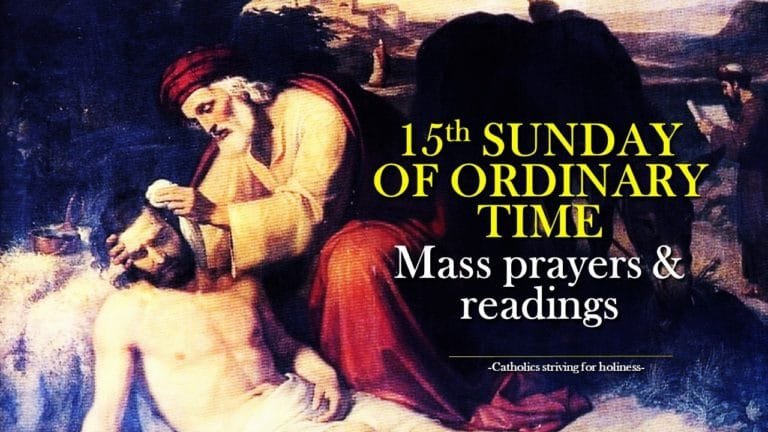
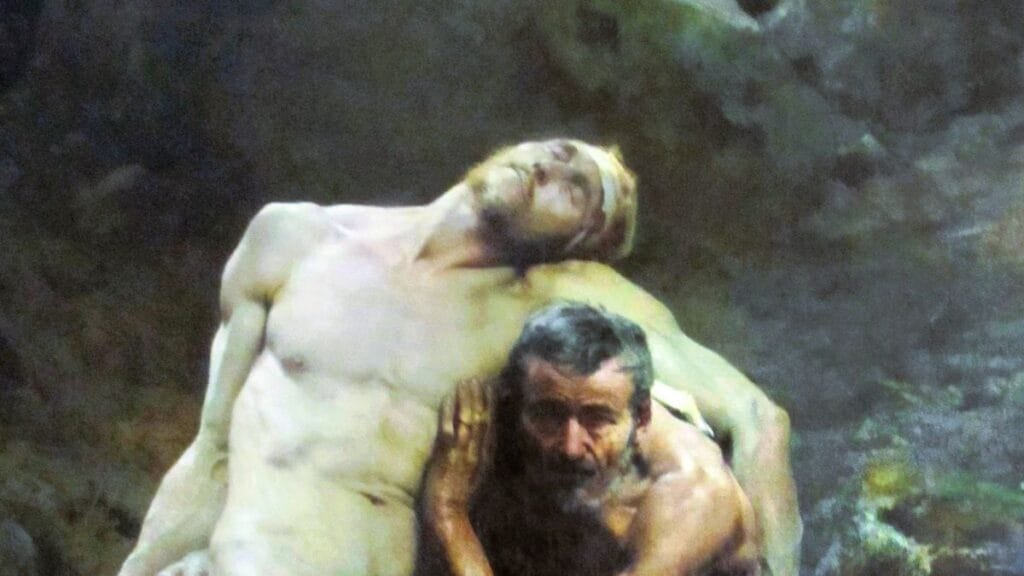
It is the Samaritan, despised by the Jews(according to the Old Testament meaning of neighbor, only those who belong the the Jewish race), who stops, binds his wounds, takes him to an inn, and pays for his care. It is he who truly knows who his neighbor is. At the same time– and as a reply to Jesus’ question: “Which of these three, in your opinion, was neighbor to the robbers’ victim?“–the Samaritan is the true neighbor to the robber’s victim because it is “he who treated him with mercy.”
Jesus concludes with the powerful command: “Go and do likewise.” (Luke 10:37).
- This parable is not just a nice story; it’s a radical call to action.
- Our love for God is inseparable from our love for our neighbor, and our neighbor is anyone in need, regardless of their background, status, or even their relationship to us.
- It challenges us to move beyond mere sentiment to concrete, compassionate action.
Saint Vincent de Paul, a priest who lived in 17th-century France, witnessed immense poverty and suffering around him and didn’t simply offer prayers; he acted.
- He founded the Congregation of the Priest of the Mission (Lazarists) and, with Saint Louise de Marillac, the Congregation of the Daughters of Charity, specifically to evangelize and serve the poor, the sick, and the abandoned.
- He organized hospitals, orphanages, and relief efforts, tirelessly working to alleviate the physical and spiritual needs of countless individuals. He wrote: “We also ought to have this same spirit and imitate Christ’s actions, that is, we must take care of the poor, console them, help them, support their cause. (From a writing of St. Vincent de Paul featured in the Office of Readings of September 27).” Serving the poor is to be preferred above all things.
- His life was a living embodiment of the Good Samaritan, demonstrating that true love for God is proven by concrete, compassionate service to our neighbor, especially those most in need. He truly “went and did likewise.”
Pope Benedict XVI, in his encyclical Deus Caritas Est, wrote, “Love of neighbour is a path to finding God, and that to close our eyes to our neighbour also makes us blind to God.” (Pope Benedict XVI, Deus Caritas Est, No. 16). And Saint Josemaria reminds us, “When you serve others, you are serving God.” (Saint Josemaria Escriva, The Way, No. 840).
It’s Time to Ask Ourselves and to Act
Dear brethren in Christ, in God’s presence, let us ask ourselves:
- Are we truly seeking God and His will in our daily lives, or do we make it seem too complicated or distant?
- In what small, ordinary ways can we show more love today for God and for those around us?
- When our lives feel scattered or restless, do we turn to Christ with faith, hope and love, knowing that without Him we can do nothing?
- How can we seek, find, and love Christ more in our work, family, or personal struggles, fulfilling the ordinary little things of each day with extraordinary love?
- Have we overlooked someone in need today, perhaps a “neighbor” right beside us?
- What acts of compassion, big or small, can we take to serve someone else, like the Good Samaritan or Saint Vincent de Paul, knowing that our love for God is inseparable from our love for others?
Almighty and Merciful God, you who are always with us, guiding us along our earthly journey, help us to imitate you and the saints in truly loving you and our neighbor by showing them acts of love and mercy. Help us to understand that our neighbor is anyone in need, and that by serving the, we serve You.
May we, by Your grace, walk the road of compassion, finding You in every neighbor, and truly “go and do likewise.” We ask this Jesus’ name and through the intercession of the Blessed Virgin Mary. Amen.
A Blessed Sunday and week ahead,
Fr. Rolly Arjonillo.
SEE AS WELL:
Stay updated: subscribe by email for free TO OUR NEW WEBSITE catholicsstrivingforholiness.org (PUT YOUR EMAIL IN THE SUBSCRIBE WIDGET).
If you need some resources regarding a particular topic, feel free to use the search WIDGET which has access to thousands of posts, categories and tags on Catholic spirituality.
Cordially inviting you as well to follow www.fb.com/Catholicsstrivingforholiness. and share our posts to help more people in their Christian faith and life.
Thanks and God bless you and your loved ones! Fr. Rolly Arjonillo.