HOMILY FOR THE 4TH SUNDAY OF LENT YEAR A
“LAETARE or REJOICE SUNDAY.
JESUS, OUR LIGHT AND OUR SHEPHERD
Summary vid + full text.
OUTLINE FOR THE HOMILY ON THE 4TH SUNDAY OF LENT YEAR A
“REJOICE, JERUSALEM, and all who love her.
Is 66: 10-11, Entrance Antiphon
BE JOYFUL, all who were in mourning;
exult and be satisfied at her consoling breast.”
1. The reason of our joy: Jesus has come to rescue us from darkness and bring us to light.
In this 4th Sunday of Lent called “Laetare (Rejoice)” Sunday, the Universal Church rejoices and exults and for what reason?
The Son of Man has come into the world to rescue us from darkness, accompanies us in this life as our Light and Shepherd and leads us to the splendor of the faith, as we pray in today’s Preface.
By the mystery of the Incarnation he has led the human race that walked in darkness into the radiance of the faith and has brought those born in slavery to ancient sin through the waters of regeneration to make them your adopted children.
2. Summary of ideas of the 4th Sunday of Lent Year A readings.
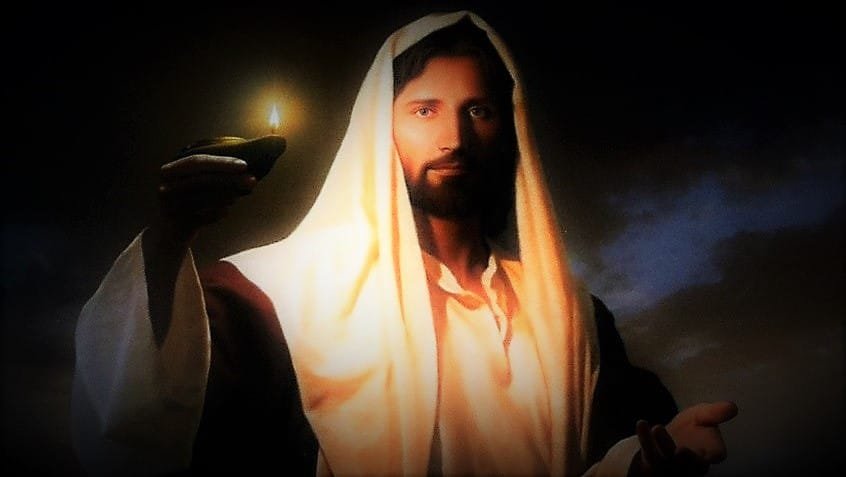
We have all been born lost and blind, deprived of the light of faith and the grace of God due to the original sin. Out of love for us, God sent His Anointed One, Our Lord Jesus Christ, – prefigured in the Old Testament by King David (cf. 1Sm 16) –, as the “the light of the world…so that those who do not see might see (Jn 9:5, 39).”
Once we were asleep, we were in darkness, but now – by virtue of Our Lord’s Death and Resurrection, we have been reborn in Baptism such that “are light in the Lord…children of light” (Eph 5: 8-9).”
3. Let us live as children of light in righteousness, truth and goodness, imitating Christ’s self-giving.
Dear friends, let us thank God for His wondrous love, and rejoice for we can affirm that the Lord is our Light and our Shepherd” (cf. Resp. Psalm) who gives sight to the blind, physical and spiritual wise (cf. Gospel).
- He has rescued us from the dark valleys of sin and death and will accompany us in this life towards the verdant pastures and peaceful light of eternal repose and happiness.
- However, in order to be cured from our spiritual blindness, we must ask God for the grace of humility, and overcome our pride many times during the day.
- Pride is this vice which leads to egoism and self-centeredness, and makes us blind of our indigent nature, and of the needs of others.
- It is the vice which rejects the help of God’s grace and prevent Him from working within us and through us.
Nevertheless, let us not forget that our condition as God’s children and his light bearers carries with it a great responsibility. It is necessary that we live a life of truth, righteousness, and goodness, pleasing Our Lord in our all our actions.
“Live as children of light, for light produces every kind of goodness and righteousness and truth. Try to learn what is pleasing to the Lord. Take no part in the fruitless works of darkness… “Awake, O sleeper, and arise from the dead, and Christ will give you light.” (Eph 5: 9-10, 14).”
- Let us also remember that Christ’s earthly life is a path of total self-giving, out of love, up to the Cross which led to the glorious light of the Resurrection. Let us then imitate Him and “travel along the way of self-giving: the Cross on our shoulders, a smile on our lips and light in our hearts (St. Josemaria, The Way of the Cross, Second Station, 3)” for this is the path which leads to the radiant joy of eternal life.
- “Self-giving is the first step along the road of sacrifice, joy, love, union with God. And thus, a whole life is filled with a holy madness which makes us encounter happiness where human logic would only see denial, suffering, pain (St. Josemaría, Furrow, n.2).”
4. Jesus performs a “new creation” upon healing the blind man.
Even when “passing by,” Jesus is never too busy to spot human suffering. As St. Josemaria noted, this reveals a divine mercy that is never indifferent (Christ is passing by, no. 67).
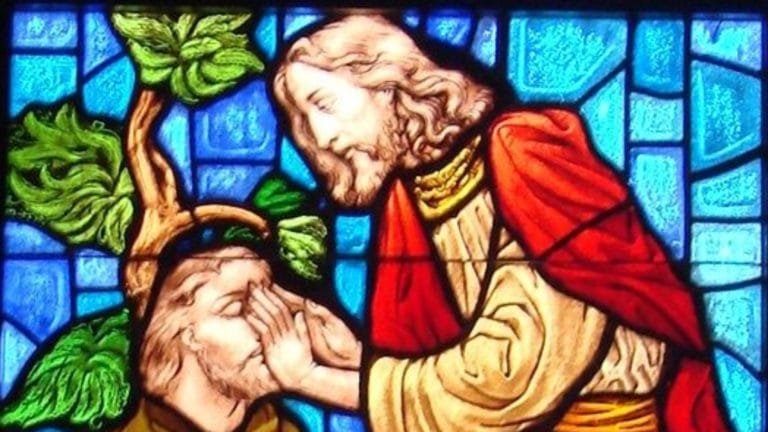
In the healing of the man born blind, Jesus performs a “new creation.” By using dust and saliva, He recalls the creation of man in Genesis, signaling that the blind man is being reborn into a new life.
The miracle is steeped in sacramental symbolism:
- The Mud : Represents the restoration of our nature. God breathes life into a figure of dust (Gen 2:7)
- The Pool of Siloam: Meaning “Sent,” it symbolizes the waters of Baptism. The pool’s water that cleanses his eyes is a symbol of the water of Baptism, which makes us capable of seeing with the light of faith. Just as the man washed and saw, Baptism configures us to Christ and grants us the light of faith. Jesus is the One sent by God, through Baptism, we are capable of seeing.
- Jesus, the Light of the World: With this miracle, Jesus manifests himself, and He manifests himself to us as the Light of the World (Pope Francis, Angelus, March 26, 2027). Th blind man represents all of us. We were born blind due to sin and are in need of a new light, the light of faith, the light of Jesus which we receive in Baptism.
5. Two Possible Responses: Pride or Faith?
The miracle sparks a “drama of interior blindness” among the Pharisees. Locked in pride and personal opinion, they deny the evidence and sink further into darkness. Their attitude warns us against being closed to the demanding truths of the Gospel.
In contrast, the blind man undergoes a journey of faith:
- Recognition: He first identifies Jesus as a man.
- Acknowledgment: He calls Him a “prophet.”
- Worship: Finally, recognizing the “Son of Man,” he exclaims, “Lord, I believe,” and worships Him.
The scene leaves us with a question of attitude: Will we be like the learned doctors, blinded by pride and judgment? Or will we be like the blind man, acknowledging our limitations to receive the light of grace?
A Blessed week ahead to you and your family, Fr. Rolly Arjonillo.
Stay updated: subscribe by email for free TO OUR NEW WEBSITE www.catholicsstrivingforholiness.org (PUT YOUR EMAIL IN THE SUBSCRIBE WIDGET).
We are also in www.fb.com/Catholicsstrivingforholiness. Kindly help more people in their Christian life by liking our page and inviting your family, friends and relatives to do so as well. Thanks in advance and God bless you and your loved ones! Fr. Rolly Arjonillo